Montessori vs. Traditional Daycare for Toddlers: Making the Right Choice
Every parent of a toddler reaches a pivotal moment: looking into local early childhood options and wondering where their child will truly thrive. Between the ages of 18 months and 3 years, young children undergo a dramatic period of cognitive, language, and emotional growth. They are not merely seeking supervision—they are building the very foundation of who they will become.
If you are exploring early childhood programs in South Florida, you have likely encountered both traditional daycare facilities and authentic Montessori environments. While both provide care, their philosophy, physical layout, and long-term impact on a child's development differ significantly.
Here is a closer look at how Montessori compares to traditional daycare for toddlers, and why the right environment during these formative years makes all the difference.
1. The Environment: Daycare Playroom vs. The "Prepared Environment"
Walk into a standard daycare room, and you will typically see bright plastic toys, loud electronic devices, and adult-sized furniture where children rely entirely on teachers to reach items.
In an authentic Montessori Young Children’s Community, every single detail is purposefully curated for the child's perspective:
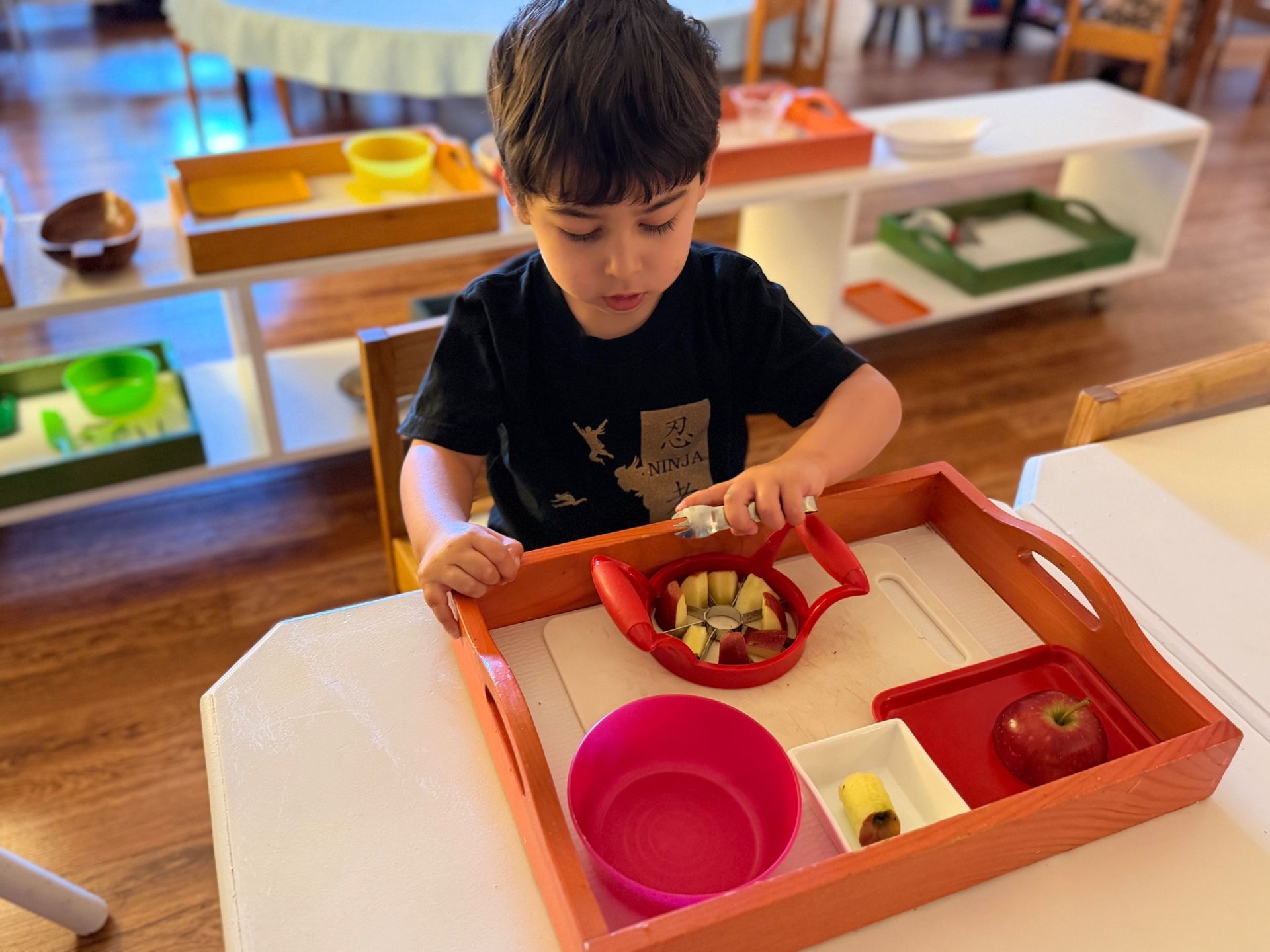
- Child-Sized Independence: Low, open wooden shelves showcase activities that toddlers can independently choose and return.
- Real, Functional Materials: Instead of toy kitchens, toddlers use real mini-glass pitchers for pouring water, small wooden knives to slice soft fruits, and real child-sized brooms to clean up spills.
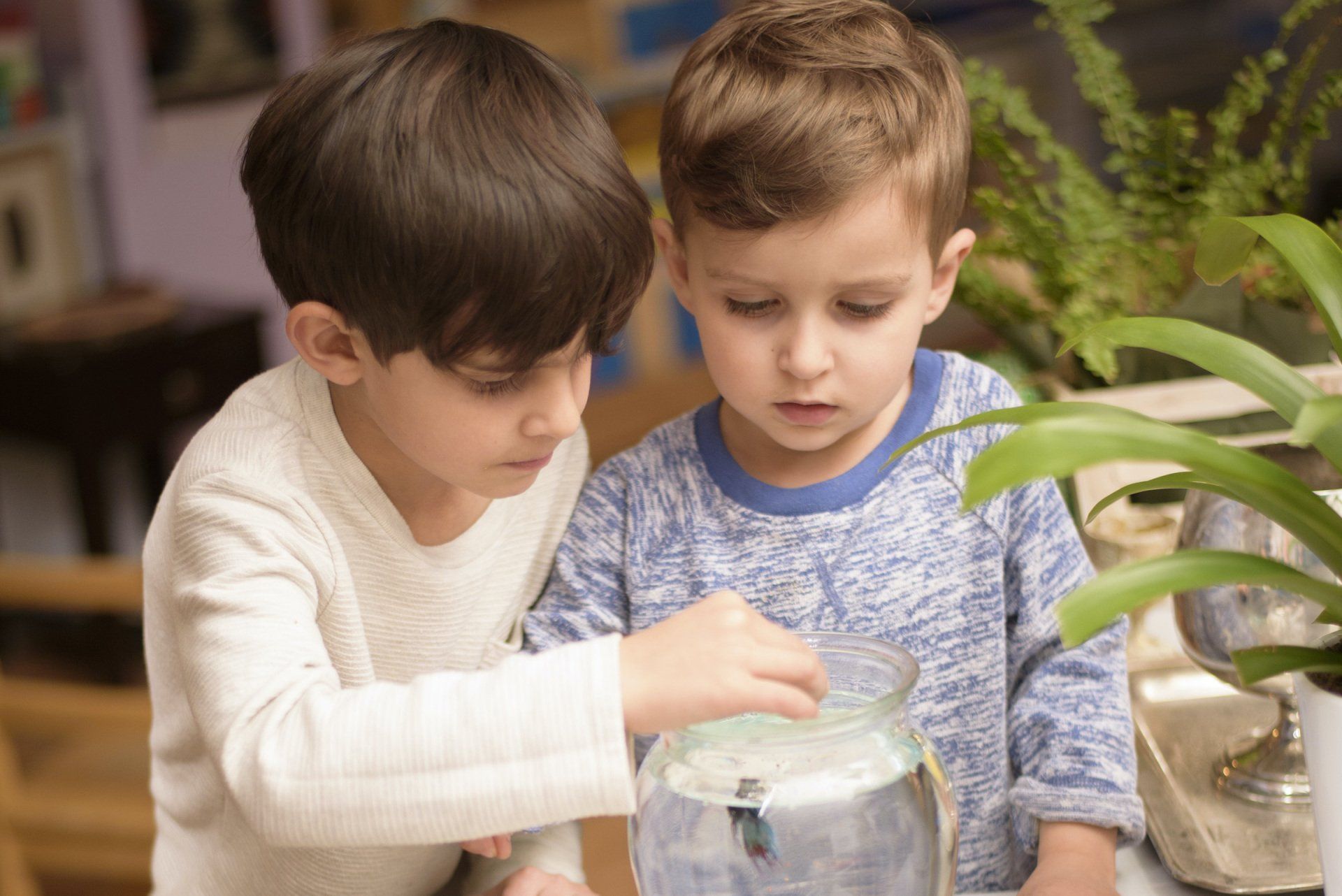
- Calm, Natural Aesthetics: Natural lighting, plants, and orderly spaces reduce overstimulation, allowing toddlers to develop deep concentration.
When toddlers are given an environment scaled to their physical size, frustration drops and genuine self-confidence soars.
2. Daily Structure: Adult-Directed Schedule vs. Self-Directed "Work"
In a traditional daycare setting, the entire group follows a rigid, teacher-led schedule: circle time together, craft time together, and snack time together. While structured, this approach often interrupts a child's natural rhythm and individual learning pace.
Montessori honours the toddler’s natural inner drive through a self-directed flow:
- Uninterrupted Work Cycles: Toddlers are given extended blocks of time to choose activities that captivate their interest, repeating them until they achieve mastery.
- Self-Regulation: A toddler learns to recognize their own body's cues—sitting down for a healthy snack when hungry rather than when a clock dictates it.
- Freedom Within Boundaries: Children move freely around the room, learning to respect their peers' working spaces and materials.
3. The Role of Adults: Caretakers vs. Trained Montessori Guides
In traditional daycare, staff primarily act as caretakers who manage behavior, keep children safe, and direct daily crafts. In a Montessori environment, educators are specially trained Montessori Guides:
- Observational Expertise: Guides continuously observe each child's sensitive periods—moments when they are naturally primed to acquire language, refine motor skills, or master toilet learning.
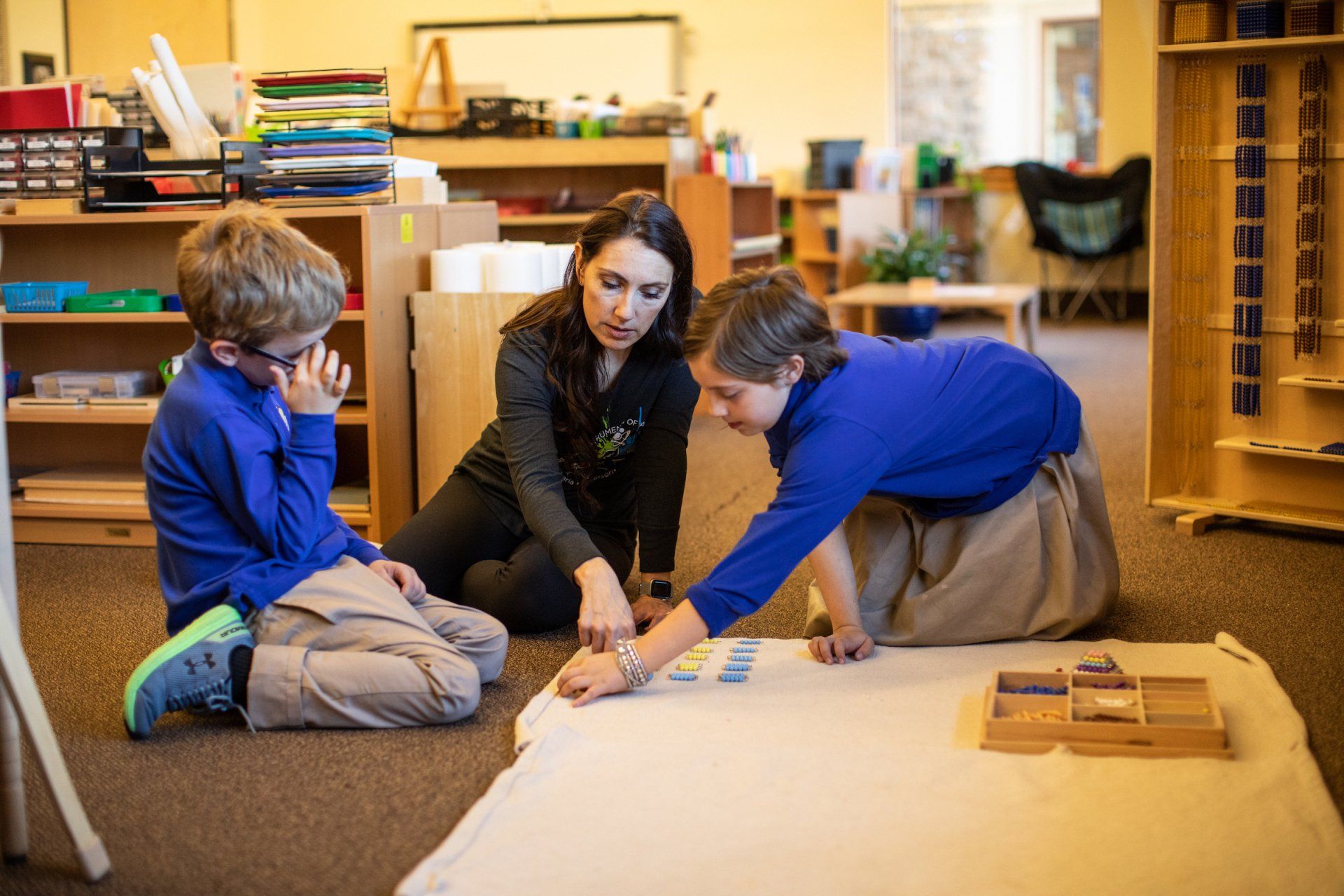
- Individualized Introduction: Materials are introduced to each child individually based on their specific developmental readiness, rather than blanket group instruction.
- Fostering Autonomy: Instead of doing tasks for the child to save time, Guides patiently teach toddlers how to do tasks themselves—from putting on their own shoes to washing their hands.
4. Key Differences at a Glance
| Feature | Traditional Daycare | Montessori Young Children’s Community |
|---|---|---|
| Primary Focus | Supervision, group play, and basic care | Independence, self-regulation, and holistic development |
| Learning Materials | Plastic toys, screens, and teacher-made crafts | Real-life tools, sensory materials, and self-correcting activities |
| Classroom Dynamic | Same-age groups following one schedule | Mixed-age community fostering peer learning and empathy |
| Long-Term Skill | Reliance on adult direction | Problem-solving, focus, and intrinsic motivation |
Experience the Montessori Difference at Little Flower Montessori School
Choosing the right educational foundation during your child's first three years sets the stage for a lifetime of curiosity, confidence, and joy. At Little Flower Montessori School in Wilton Manors, Florida, our AMI-accredited toddler community provides a peaceful, intentional space where young children learn that they are capable, valued, and independent.
Ready to see our calm, vibrant toddler environment in action?
Schedule a Campus Tour with Little Flower Montessori School Today or call our admissions team at (954) 565-8205
to learn how our toddler program supports your family's journey.